
DevRel in the Age of AI - Why Developer Relations Has Never Mattered More
DevRel in the Age of AI: Why Developer Relations Has Never Mattered More
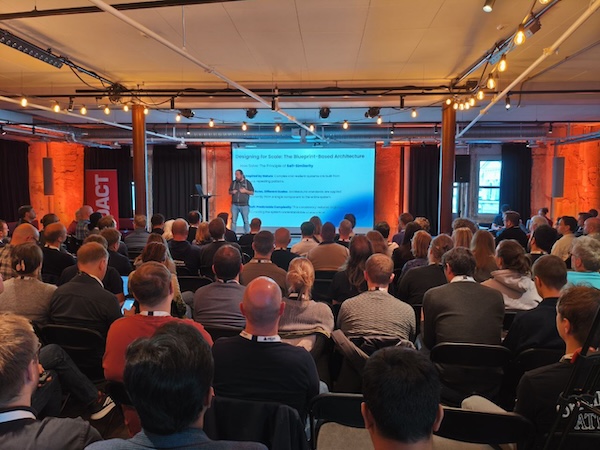
There's a word that keeps coming up in conversations I've had at the last dozen conferences, in speaker lounges and post-talk dinners, in DMs from people building developer tools and from people using them.
That word is trust.
Not features. Not pricing. Not benchmarks. Trust.
I've been doing Developer Relations in some form since 2015 — moving through different roles in the field, now as Tech Evangelist at Fractal Cloud. I've been on 200+ stages, I've built community from zero, I've watched products succeed because developers believed in them and fail because they didn't. And the pattern is consistent enough to be a thesis: in developer-facing products, trust is the primary variable.
In 2026, with AI reshaping every layer of how software is built, that variable has become more complex, more contested, and more consequential than ever. Which is why it's the right moment to talk seriously about DevRel — what it actually is, what it's not, and why companies that still treat it as a "nice to have" are making an expensive mistake.
What DevRel Actually Is (And Why the Confusion Persists)
Developer Relations is not marketing with a GitHub account. It's not a PR function that happens to write code samples. It's not community management with conference speaking thrown in.
DevRel is a family of distinct disciplines, each with its own craft, that collectively address one problem: how does a company build and maintain genuine trust with the developer community?
The role names vary by company and context — you'll see titles like Developer Evangelist, Technical Community Manager, DX Engineer, Developer Education Lead — but the underlying functions are consistent. Here's how they look in practice:
Developer Advocates are the connective tissue between a product and its users. They write tutorials, speak at events, post real-world code, and — critically — bring community feedback back into the product. The best ones are developers first. They've felt the pain of poor documentation, cryptic SDKs, and APIs that almost work. They advocate for developers as much as they advocate about a product.
Developer Experience Engineers focus on friction. Every unnecessary step in a getting-started guide, every error message that tells you nothing, every SDK that requires three hours of configuration before you can do anything useful — that's DX debt. DX engineers reduce it systematically. Their KPI is something like: how long before a developer gets their first successful result?
Technical Community Managers build the spaces where developers talk to each other. Discord servers, GitHub Discussions, meetups, hackathons. They cultivate ecosystems where knowledge circulates, where newcomers get help, where experienced developers feel ownership. When this works, the community starts creating value that no team of advocates could create alone.
Developer Educators think pedagogically. Not "what should developers know about our product" but "how do developers actually learn, and what's the most effective path through this complexity?" Courses, interactive sandboxes, certifications — structured learning that respects the developer's time and intelligence.
These roles overlap, and in smaller organizations they collapse into one or two people. But the discipline is coherent: every role is in service of developer success, not company messaging.
Why Developers Are the Hardest Audience in Tech
Developers are professionally skeptical. It's not a personality trait — it's a skill. They debug systems for a living. They read source code when documentation fails them. They notice when a demo is rigged, when a benchmark was cherry-picked, when a blog post was written by someone who has never actually used the product.
Traditional marketing fails with developers in a way it doesn't with most other audiences. Hype backfires. Buzzwords are red flags. "We're the leading AI-native cloud platform" means nothing. "Here's a working integration with the tool you already use, here's the code, here's what breaks and why" means everything.
What converts developers isn't reach. It's earned credibility — and DevRel is the only function in a company specifically designed to build it.
I've seen this pattern repeat across every product cycle I've been part of. The developer tools that win aren't always the technically superior ones. They're the ones that developers trust. And trust is built through consistency, honesty, genuine community investment, and the willingness to say "this doesn't work well yet."
The AI Layer Changes Everything
Here's what's different in 2026.
The AI explosion has made the developer ecosystem dramatically more complex and dramatically harder to navigate. There are hundreds of new model providers, embedding services, vector databases, agent frameworks, evaluation tools, inference APIs, fine-tuning platforms. The vocabulary changes every quarter. The "right" architectural pattern for an AI application in 2024 is already being questioned.
In this environment, DevRel has shifted from important to essential — and for reasons that go beyond the usual arguments.
AI products resist traditional evaluation. A payment API either processes a payment or it doesn't. An LLM's behavior is probabilistic, context-dependent, and use-case-specific. Developers can't evaluate these products in isolation. They need guidance from practitioners who have used them in real scenarios, who can say "for your specific use case, here's what to watch out for." That's developer advocacy at its core — and it's the only credible way to help developers make decisions in a market full of capability claims and insufficient benchmarks.
The learning curve has never been steeper. Prompt engineering, retrieval-augmented generation, model context protocols, agentic workflows, evaluation frameworks — the knowledge required to build production-quality AI applications is compounding faster than most developers can absorb it. Developer education has become a genuine differentiator. The companies that invest in helping developers understand these concepts — not just use the product — earn loyalty that's very hard to displace.
AI mediates discovery. This is the one that most companies haven't internalized yet. Developers increasingly ask AI assistants for tool recommendations. "What's the best vector database for this use case?" "How do I build a RAG pipeline with minimal latency?" The quality of those answers reflects the quality of the documentation, tutorials, community content, and technical writing that exists in the training data and in real-time retrieval. DevRel work today — the blog posts, the working examples, the community discussions, the clear documentation — becomes the infrastructure for AI-mediated discovery tomorrow. Companies with thin developer content are becoming invisible in ways they don't yet understand.
Community has become a moat. In markets where model capabilities are converging and switching costs are low, the developer community around a product is often the most durable competitive advantage. Communities with strong identity, genuine mutual aid, and shared purpose don't migrate easily. They weren't built quickly either.
What Good DevRel Looks Like From the Inside
I want to be specific here, because DevRel gets a lot of surface-level treatment.
Good DevRel starts with genuine empathy for developers — which means it starts with people who are developers or have been deeply embedded in developer workflows. You cannot fake the intuition for what makes an integration painful, what makes documentation confusing, or what makes a talk actually useful versus forgettable.
Good DevRel is connected to product. DevRel that operates purely as an external communication function — writing content about a product but not influencing it — is doing half the job. The best DevRel teams have a real feedback loop into roadmap, API design, and documentation standards. They carry community voice into product decisions. When that feedback loop breaks, you get well-presented products that still frustrate users.
Good DevRel is measured thoughtfully. Not everything maps to a conversion funnel, and that's okay. Time-to-first-successful-API-call, documentation quality scores, community health metrics, developer Net Promoter Score — these matter. The field is developing better measurement frameworks, and that's a good sign. But the underlying logic is clear: if developers succeed faster and trust the product more, the business outcomes follow.
Good DevRel is patient. This is the hardest part to sell internally. Trust is not a campaign. It's not built in a quarter. The companies that have treated DevRel as a short-term growth lever have consistently gotten short-term results followed by community resentment. The ones that play the long game — consistent presence, honest communication, real investment in community — tend to win the market as a side effect.
A Profession at an Inflection Point
DevRel has always had an identity problem. Is it engineering? Marketing? Product? Sales? The honest answer — all of these and none of them cleanly — has made it difficult to budget, difficult to measure, and easy to cut in downturns.
That's starting to change.
The most successful developer-facing companies of the last few years — across AI infrastructure, cloud-native tooling, open source platforms — have shared a pattern: they've invested in developer experience and community from day one, and they've treated DevRel as a strategic discipline, not a support function.
The field is maturing. There are dedicated spaces for practitioner exchange, shared frameworks for measurement emerging across the industry, and a generation of people who have built real expertise across multiple companies and product cycles. The signal is consistent, across events and communities I'm part of: DevRel is professionalizing, and the timing is right.
In 2026, with AI making developer trust harder to earn and more valuable than ever, that professionalization isn't optional.
If this resonates, I'd love to continue the conversation — find me on LinkedIn where I write regularly about Developer Relations, Developer Experience, and the intersection of community and cloud-native. The conversation is just getting started.